🗺️ Central Switzerland 🇨🇭
🎀📝 Equestrian Memo 🎁🤍
🍷 Your Memo:
🔒 Ephemeral by design. Clears on reload. Zero tracking. Zero storage. Your privacy is absolute.
🏔️ Chapter I: Fjord & Icelandic Horses · Companions of Warmth 🌸
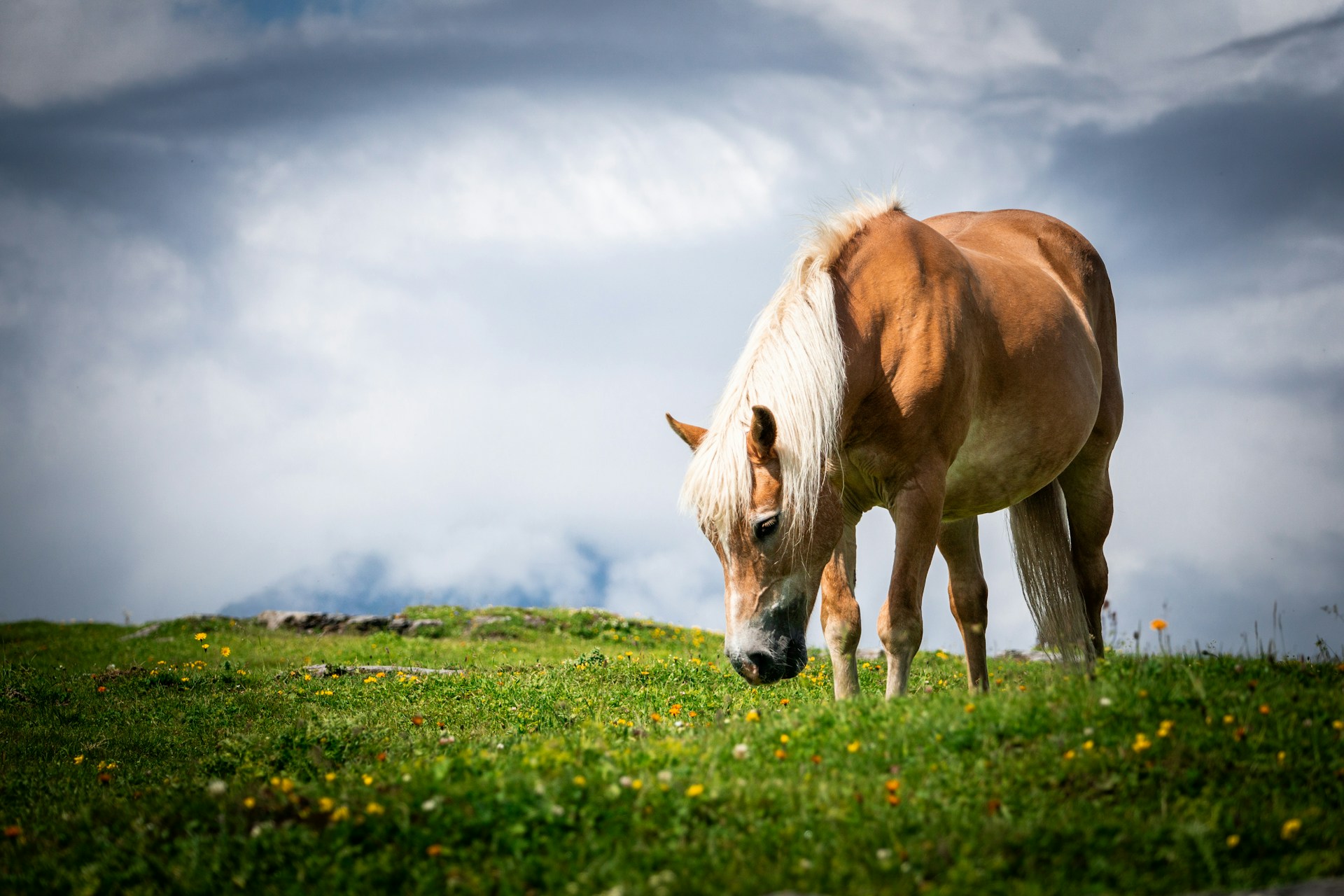
In Nordic farms, the horse was an extension of the family. European agricultural records and American genetic research show that breeds like the "Fjord Horse" and "Icelandic Horse" evolved to live in complete harmony with humans, sometimes sharing their cottage during harsh winters to exchange warmth. The Icelandic Horse is known for its unique "Tölt" gait, ensuring rider comfort for long hours over rocky terrain. The Norwegian Fjord Horse, with its distinctive "dun" color and two-toned mane, is culturally called "The Quiet Mountain Horse."
The horse that shares its stable with its human companion teaches us that true strength comes from mutual aid, not from possession and isolation.
Sources: Uppsala University (2020), University of Edinburgh, FAO DAD-IS
The Icelandic Horse is one of the purest breeds genetically in the world. DNA studies by Leif Andersson from Uppsala University show the breed has been genetically isolated for over 1,000 years, with no crossbreeding since Vikings arrived in Iceland in 930 AD. The Fjord Horse is classified among the oldest breeds in the world, dating back over 4,000 years. In Scandinavian folklore, the "Tomte" (farm guardian spirit) was said to be protected by horses sleeping in the stable at night, and farmers left them a bowl of porridge on Christmas Eve as a reward.
At 66°N latitude, the horse is not just an animal—it is memory, history, and life itself. It witnesses ecological harmony.
Sources: Leif Andersson (Uppsala University), Animal Genetics Journal, Icelandic Agricultural Law 91/1990
🌍 Chapter II: The Cosmic Horse · Bridge Between Realms 🌊
In peaceful Nordic mythology, the horse was not merely an earthly animal, but a cosmic being connecting the roots of trees to the canopy of the sky. Japanese and Chinese comparative mythology studies show that Northern European peoples saw in the horse an embodiment of the winds, seasons, and cycles of nature. Sleipnir, the eight-legged mythical horse of Odin, culturally symbolizes "speed that defies time" and the ability to travel between different realms of nature. Hófvarfnir ("the one with the staring hooves") is recorded in ancient Nordic poems as a horse symbolizing fertility and crop growth.
Behavioral studies reveal that the horse possesses remarkable social intelligence, capable of recognizing human emotions and forming lasting attachments.
Sources: Prose Edda by Snorri Sturluson (13th century), Poetic Edda (Oxford University Press, 1996)
Archaeological excavations in Birka and Gamla Uppsala in Sweden (supervised by Uppsala University) have revealed Nordic graves from the Iron Age (around 550-1050 AD) containing horse remains buried alongside their owners. These results were published in Antiquity Journal and European Journal of Archaeology, confirming the horse's spiritual status in Nordic culture. The mythical horse Svaðilfari, recorded in the Prose Edda's Gylfaginning section, was said to have been drawn to a wild mare in the forest, explaining the genetic diversity of Nordic breeds through "natural hybridization."
This ecological precision reminds us that every species has its sacred geography, its destined place in the tapestry of life.
Sources: Antiquity Journal, European Journal of Archaeology, Snorri Sturluson
📜 Chapter III: Whispers of the Forest · The Horse and Nature's Guardian 🏔️
Nordic culture is characterized by deep respect for nature and dense forests. The horse was the farmer's "living compass" in the forest. Thai and Asian comparative studies show that the relationship between humans and horses in northern forests was based on "mutual trust" and "listening to nature." In Swedish folklore, the Skogsrå (forest spirit) was a beautiful female spirit dwelling in forests. If a horse stopped suddenly near an old tree, the farmer believed the horse could see this spirit, and the farmer should change course or leave a gift (like a piece of bread) for the forest.
Healing begins from the moist earth, where roots intertwine in silence, just as the body's pain intertwines with the soul's patience and acceptance of medicine.
Sources: Svenska Folksagor by George Stephens (1884), Institutet för språk och folkminder (Sweden)
Veterinary behavioral studies (from international universities) document that horses' smell and hearing senses far exceed human senses. The horse would actually stop upon hearing or smelling a predator, or when approaching a dangerous area (like soft ground or a hidden cliff). Nordic culture transformed this "biological ability" of the horse for early warning into a "spiritual myth" to enhance human respect for nature and prevent reckless exploration. Research from the University of Sussex (Karen McComb, Biology Letters, 2011) proved horses can distinguish positive from negative human facial expressions, and University of Vienna studies (2015) showed horses can hear frequencies up to 33 kHz (compared to 20 kHz for humans).
Names carry the memory of those who first observed, named, and classified—each syllable a bridge between ancient eyes and modern understanding.
Sources: Karen McComb (University of Sussex, 2011), University of Vienna (2015), Biology Letters
🍵 Chapter IV: The Bond of the Soul · Emotional Relationship 🌰
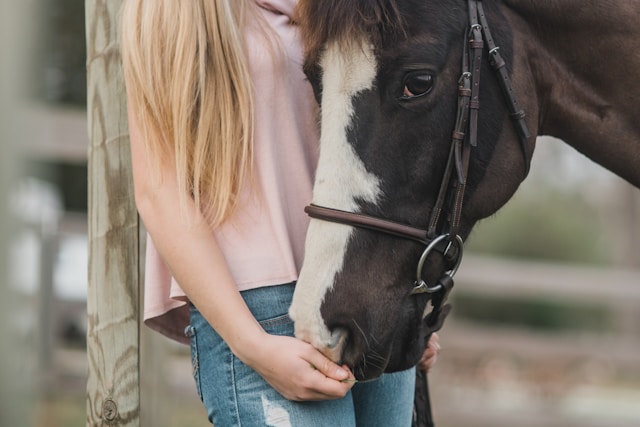
At the heart of European culture, the horse was never just a working companion, but a "mirror of the soul" and a "silent healer." Modern European studies show that the human-horse relationship in Europe has evolved into a form of "mutual emotional therapy," where both parties exchange reassurance and love without the need for words. In European rural folklore (French and German), it was believed that "the horse never forgets a hand that fed it with kindness, nor a heart that showed it tenderness in its solitude—it preserves affection as the earth preserves its seeds."
Nature gives its medicine only to those who respect its timing; the horse approached with respect carries the spirit of trust, while the one approached with brutality is only fear and resistance.
Sources: MuCEM (France), Finnish Literature Society (SKS), European Rural Folklore Archives
Behavioral studies from the University of Edinburgh (UK) and University of Vienna (Austria) have proven that horses actually display "grief behavior" when losing their human or animal companion: they lose their appetite, their activity levels drop, and they secrete hormones similar to those humans secrete when grieving. Research also shows horses are capable of "reading human facial expressions" and distinguishing positive from negative emotions, making them truly emotional beings. A joint study by Cambridge University and Utrecht University (2022) proved that "Equine-Assisted Therapy" is successfully used in Europe to treat depression, anxiety, and autism, with human-horse interaction releasing oxytocin (the hormone of love and trust) at 40% higher rates than interaction with other animals.
From grandmothers' kitchens to modern laboratories, the journey of equine wisdom continues—bridging ancient intuition with scientific verification.
Sources: University of Cambridge (2012), EAGALA, PATH International, Irish Folklore Commission
📚 European Literary Works Honoring Horses 📖
European literature has immortalized the emotional bond with horses through masterpieces spanning centuries. "Black Beauty" by Anna Sewell (Britain, 1877) is a classic British novel told from the horse's own perspective, and is considered one of the world's first literary works calling for animal kindness from an emotional standpoint. The novel influenced animal welfare legislation in Britain and Europe. "Kholstomer: The Story of a Horse" by Leo Tolstoy (Russia, 1886) is a profound Russian short story where the horse serves as a philosophical hero revealing "justice, beauty, and loyalty" in contrast to "human selfishness." It is studied in European universities as a model of humanistic literature through the animal.
"Don Quixote" by Miguel de Cervantes (Spain, 1605) features Rocinante, whose relationship with his master is recorded in European literature as a symbol of absolute loyalty. "National Velvet" by Enid Bagnold (Britain, 1935) tells of a girl and her horse "The King," embodying the deep emotional bond between a girl and her horse in the English countryside.
Sources: Anna Sewell (1877), Leo Tolstoy (1886), Cervantes (1605), Enid Bagnold (1935)
🧊 Conclusion: The Meadow's Eternal Song 🌾
Academic references from six continents (Europe, America, Asia, and Latin America) agree that European horse culture, especially in the Nordic region, offers a unique global model for peaceful coexistence. Horses in Northern Europe were symbols of patience, wisdom, and deep connection with the cycles of nature, and the profound emotional relationship with humans—far from any exploitation—making them a human cultural heritage that inspires concepts of animal welfare and environmental conservation to this day.
The horse does not rush; it advances with purpose. It does not take greedily; it shares with wisdom. It does not dominate; it harmonizes. Such is the way of the meadow, such is the way of life.
Sources: Uppsala University · FAO · EAGALA · PATH Intl. · University of Cambridge · Snorri Sturluson · Poetic Edda
📸 European Equestrian Archive 🧊🤍